
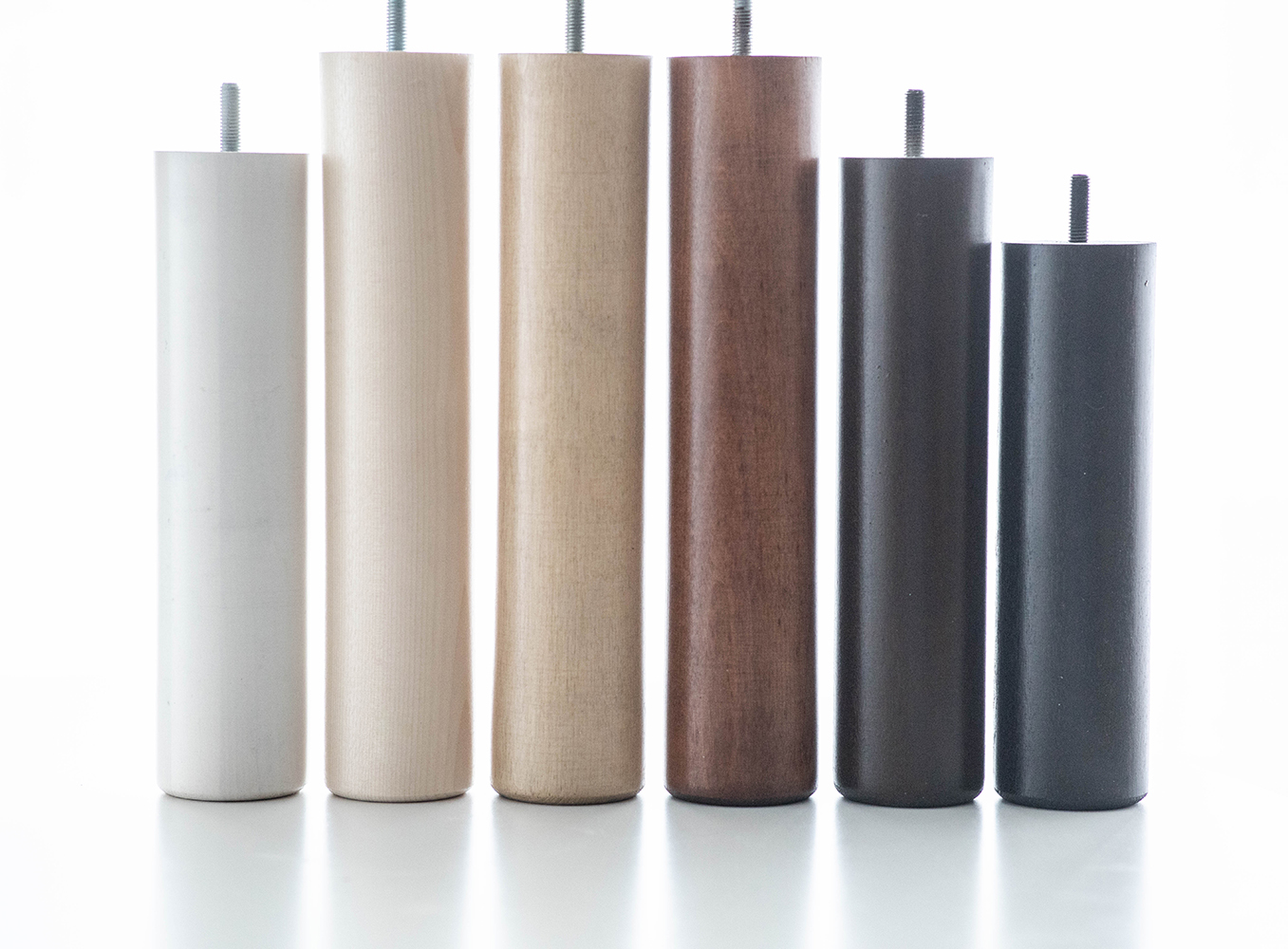
In the manufacture of sofa legs, wood, metal, and plastic are most commonly used, with wood being the most popular material due to its natural beauty, durability, and workability. Domestic wood species such as birch, pine, oak, and ash provide an excellent foundation for manufacturing high-quality furniture legs. Material choice significantly affects the durability, appearance, and lifespan of sofa legs. Wooden legs bring warmth and naturalness, metal parts provide a modern look, and plastic is particularly suitable for budget-friendly solutions. Surface treatment finishes the appearance of the sofa leg and protects it from wear.
Sofa Leg Materials – What Options Are Available?
Sofa leg manufacturing primarily uses three material groups: wood, metal, and plastic. Of these, wood is clearly the most versatile and traditional option, offering countless possibilities in both design and surface treatment.
Wood materials have been popular in furniture manufacturing for centuries due to their natural beauty, durability, and ease of working. Wooden sofa legs can range in style from classic turned models to modern, straight-lined solutions.
Metal is another common material, used especially in modern furniture design. Metal legs are most often made from steel, aluminum, or brass, and can be painted, coated, or untreated.
Plastic is an affordable and lightweight material used particularly in mass production and more budget-friendly furniture. Modern plastic composites, however, offer surprisingly good properties in terms of durability and appearance.
Which Domestic Wood Species Are Best Suited for Sofa Legs?
Among Finnish wood species, birch, pine, oak, and ash are excellently suited for sofa leg manufacturing. Domestic wood species offer durability and beautiful texture that makes each leg unique.
Birch is one of the most used materials in Finnish furniture manufacturing. It is a medium-hard wood species that is well-suited for turning and is light in color. Birch withstands loads well and is therefore an excellent choice for sofa legs. Birch can be easily stained and surface-treated in various ways.
Pine is a softer wood species, but when properly treated, it offers a good alternative for more affordable solutions. Pine heartwood is more durable than sapwood, and its yellowish color deepens beautifully over time. Pine sofa legs are particularly popular in furniture made from domestic wood.
Oak is one of the hardest and most durable domestic wood species. Its dense structure makes it an ideal material for sofa legs that must bear heavy weights. Oak is warm golden-brown in color, and its beautiful grain pattern adds character to furniture.
Ash resembles oak in its properties but is lighter in color. It is an extremely tough and flexible wood species, making it a good choice especially for tall and thinner sofa legs that are subject to lateral forces.
How Does Wood Hardness Affect the Durability of Sofa Legs?
Wood hardness is directly related to the durability and lifespan of sofa legs. Harder wood species such as oak and ash withstand weight, wear, and impacts better than softer wood species.
Wood hardness is generally measured on the Brinell hardness scale, which indicates how well wood resists indentations. For example, oak has a Brinell value of about 3.7, while pine has a value of only about 1.6. This practically means that oak withstands indentations more than twice as well as pine.
For sofa legs, hardness is particularly important because they are subject to constant loading. When sitting on a sofa, great pressure is applied to the legs, which can lead to indentations in softer wood species and eventually even structural damage over time.
The usage environment also affects the importance of hardness. In households with children or pets, sofa legs often experience harder wear, making durable materials for sofa legs particularly important. In public spaces, such as waiting areas and restaurants, the wear on sofa legs is many times greater compared to home use.
When Are Metal or Plastic Legs a Better Choice Than Wooden Ones?
Metal and plastic legs can be better than wooden alternatives in certain situations. Metal legs are an excellent choice when special durability or a modern appearance is needed.
Metal legs are excellently suited for spaces with high moisture stress, such as spas or sauna facilities. Metal also withstands chemicals better than wood, making it a good choice for healthcare facilities, for example. Additionally, metal legs offer an excellent alternative when furniture requires a thin and stylish, yet durable leg structure.
Plastic legs, on the other hand, are useful in situations requiring a lightweight and affordable solution. They are easily moldable into different shapes and colors, making them a flexible choice for mass production. Plastic legs also do not absorb moisture, so they are well-suited for humid spaces.
However, it should be noted that while metal and plastic legs offer advantages in certain situations, wooden legs are still superior when creating a warm, natural atmosphere or when furniture is intended to last from generation to generation. The lifespan of professionally manufactured furniture components is often longer than their plastic counterparts.
How Do Different Surface Treatments Affect the Appearance and Durability of Sofa Legs?
Surface treatment is an essential part of the sofa leg manufacturing process, as it both protects the material and determines the final appearance. Proper surface treatment can multiply the lifespan of a wooden sofa leg.
Oils, such as linseed oil or hardening wood oil, penetrate the wood surface and enhance its natural grain pattern. Oil treatment gives wood a deep, warm appearance and protects it from moisture. Oiled surfaces are easily repairable but require regular maintenance to remain in good condition.
Waxes form a protective film on the wood surface that repels dirt and moisture. Wax treatment gives wood a silky, natural appearance and feels pleasant to touch. Waxed surfaces withstand moderate wear but are not suitable for particularly demanding conditions.
Lacquers form a hard, wear-resistant film on the wood surface. Lacquering effectively protects wood from moisture, dirt, and scratching. Modern water-based lacquers are environmentally friendly and provide good protection for wood surfaces. Lacquering can achieve glossy, semi-gloss, or matte finishes.
Paints cover the wood’s natural grain pattern but offer a wide color range for customizing interior decoration. Painted sofa legs are popular especially in country romantic and shabby chic styles. Paint effectively protects wood from external stresses.
In industrial applications, as CNC machining has changed furniture component manufacturing, surface treatments have also evolved. For example, UV-curing lacquers offer excellent durability and fast production processes.
Choosing the Right Material for Sofa Legs – What to Consider?
Choosing the right material for sofa legs depends on several factors, such as intended use, loading, style, and environmental considerations. Intended use and style are often the most determining factors in material selection.
First, consider the sofa’s usage environment. Is it for home, public space, or perhaps outdoor use? For home use, wooden legs are an excellent choice due to their natural appearance and good durability. In public spaces, metal legs may be a better option due to their special durability.
Loading is another important factor. Large and heavy sofas need particularly durable legs, making hard wood species like oak or ash, or alternatively metal legs, good choices. For lighter sofas, softer wood species like pine may also be sufficient.
Style often determines material selection. Classic interiors are best suited to traditional turned wooden legs, while modern styles benefit from metal legs that provide the right appearance. In eclectic interiors, one can play with combinations of different materials and styles.
Ecology is an increasingly important factor in material selection. A sustainable and responsible choice is to favor domestic, durable wood species whose origin is traceable. Furniture components made from domestic wood species are not only an ecological choice but also a way to support local expertise.
We use only the finest Finnish wood species and combine traditional craftsmanship skills with modern manufacturing methods. We respect the origin of wood and commit to environmentally friendly production at every stage.
Want to know more or request a quote? Feel free to contact us!