
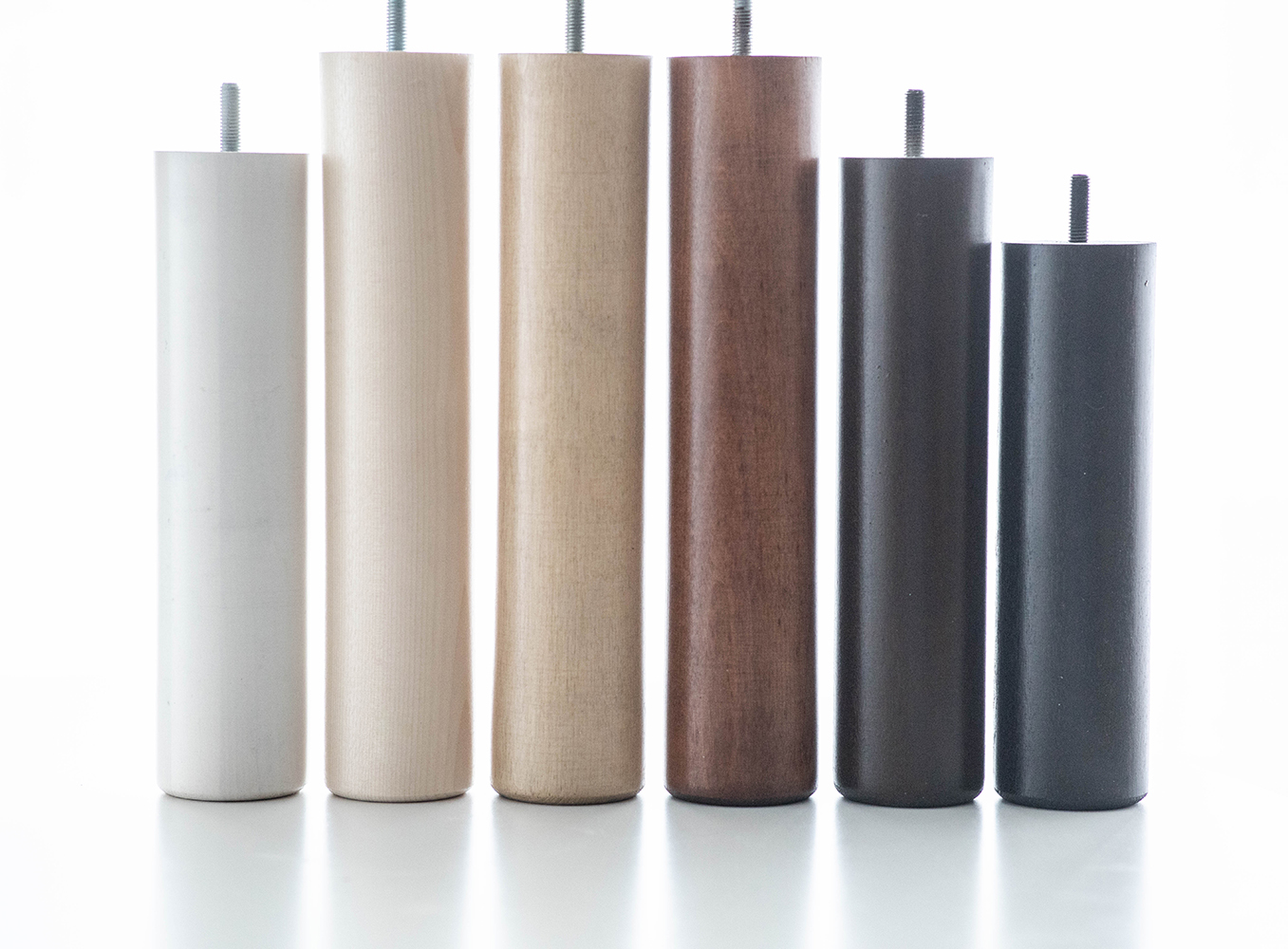
Quality criteria for turned wooden furniture components consist of several important factors that affect both the durability of the parts and the overall appearance of the furniture. High-quality turned parts, such as furniture legs, decorative columns and knobs, are known for precise workmanship, flawless material quality and careful finishing. The most essential quality criteria include high-quality wood material, precise dimensional tolerances, symmetrical design, careful sanding and appropriate surface treatment. These factors together ensure the longevity and aesthetic value of furniture components.
What are the most important quality criteria for turned wooden furniture components?
The most important quality criteria for turned wooden furniture components determine both their functionality and aesthetic value in the complete piece of furniture. These parts are not merely decorative elements but structurally critical components that directly affect the furniture’s durability and service life.
The quality of furniture components is primarily evident in their dimensional accuracy and consistency. Each part has its own function in the whole – for example, chair legs bear weight and must be exactly the same size and shape. In addition to dimensional accuracy, surface smoothness and finishing are significant quality factors.
The quality of turned parts also affects the furniture’s comfort of use. For example, wooden knob decorations and handles feel pleasant to the touch only when they have been turned and sanded properly. Carefully manufactured parts make furniture durable and easy to maintain.
Understanding quality criteria is important for both professionals and consumers. For professionals, it provides benchmarks and quality assurance tools, while for consumers it gives tools to identify durable furniture that retains its value.
How does wood material affect the quality of turned furniture components?
Wood material is the foundation of everything in the quality of turned furniture components. Different wood species behave differently in turning, and their natural properties largely determine the durability and appearance of the final result. Finnish wood provides an excellent starting point for high-quality turning thanks to its dense and even grain pattern.
The moisture content of wood is one of the most critical factors in turning. Wood that is too moist may warp or crack when drying, while wood that is too dry may break during processing. The ideal moisture percentage for turning is generally 8-12% depending on the wood species and application.
Wood grain patterns and density significantly affect the final result:
- Dense-grained wood species, such as birch and maple, are suitable for precision-demanding detailed turnings
- Softwoods, such as pine, are softer and suitable for larger, simpler shapes
- Oak and ash are durable options for structural parts due to their strength
Among Finnish wood species, birch, alder and pine are particularly excellent for turning. Birch provides a consistent and durable material that is versatile for different applications. Alder is easily workable and low-movement material that is well suited for painted parts. Pine heartwood offers a beautiful reddish tone and is well suited for traditional furniture.
What are the most important quality factors in manufacturing methods?
The quality of manufacturing methods significantly determines the success of a turned wooden furniture component. The most essential quality factors relate to machining accuracy, tool quality and manufacturing process consistency. Proper machining techniques enable both aesthetically pleasing and structurally durable results.
The differences between handcraft and mechanical turning can be examined from a quality perspective:
- Hand turning enables individual details and utilization of traditional woodworking knowledge
- CNC turning ensures dimensionally accurate and precisely repeatable parts in series production
- Hybrid turning combines the advantages of both methods – mechanical precision and handcraft finishing
Tool quality directly affects the machining finish. Sharp, high-quality gouges and other tools leave a clean and precise finish that requires less post-processing. Dull tools can tear wood and cause uneven finish that weakens the part’s quality and durability.
Quality control is important at every stage of the manufacturing process. This means, for example, careful selection of wood material, monitoring machining accuracy and inspecting the finished part according to predetermined quality criteria. A traceable manufacturing process ensures that possible quality deviations are detected in time.
How do you recognize a high-quality turned wooden furniture component?
A high-quality turned wooden furniture component is primarily recognized by its smooth and flawless surface. When examining a turned wooden part, pay attention to surface smoothness and finishing – a high-quality part shows no machining marks, scratches or irregularities. The surface should feel smooth when tested with a finger without sharp edges or rough spots.
Symmetry and proportions tell a lot about the part’s quality. Examine the part from different angles and ensure that:
- Round forms are completely symmetrical relative to their central axis
- Repetitive elements, such as grooves or ridges, are even and uniform
- Mass-produced parts are identical to each other
Joints and attachment points are critical for quality. The joint points of a high-quality part are precise, tight and carefully executed. For example, a furniture leg’s joint dowel is exactly the right size and at a right angle to the leg’s longitudinal axis.
Utilization of wood grain pattern indicates the manufacturer’s skill. A skilled turner knows how to utilize the wood’s natural patterning so that it emphasizes the part’s shape and brings out the best qualities of the wood material. A quality part is turned “with the grain” so that the grain runs as coherently as possible following the part’s forms.
What kind of surface treatments ensure the best quality and durability?
Proper surface treatment is a decisive factor for the durability and appearance of turned wooden furniture components. High-quality surface treatment protects wood from wear, soiling and moisture, while emphasizing the wood’s natural beauty. The choice of surface treatment should consider the furniture’s intended use and location.
The most common surface treatment methods for furniture components are:
- Oils (linseed oil, carnauba oil) – emphasize wood’s natural tone and feel
- Waxes – provide a silk-matte surface and reasonable protection
- Lacquers – offer strong protection and glossy or matte surface as needed
- Paints – enable use of colors and cover wood grain pattern
Natural surface treatment agents have grown in popularity. Traditional beeswax, linseed oil and shellac are environmentally friendly alternatives that provide natural results. They are also safe to use and easily repairable if the surface becomes damaged.
Surface treatment significantly affects wood movement. Balanced treatment that allows wood to “breathe” appropriately but protects it from excessive moisture is ideal. Too tight surface treatment can cause problems if wood tries to move with moisture fluctuations but cannot do so under the surface treatment.
To reduce maintenance needs, the surface treatment should be easily renewable. The advantage of an oiled surface is its easy spot repairability, while repairing a lacquered surface often requires sanding and retreating the entire surface.
The significance of quality criteria for furniture longevity
Carefully selected and followed quality criteria are the foundation for furniture longevity. When all the aforementioned factors – high-quality wood material, skilled manufacturing, precise proportions and appropriate surface treatment – combine, the result is a durable furniture component that serves from generation to generation.
High-quality manufactured turned wooden parts maintain their functionality for decades. For example, precisely turned chair legs made from the right wood species withstand daily use and loading without warping or joint loosening.
Repairability is an advantage of quality furniture. When a furniture component is manufactured with quality, it is often also repairable. For example, tightening joints or renewing surface treatment can restore furniture to working condition, while poor-quality parts often must be completely replaced with new ones.
We at Sorvipojat understand the significance of quality criteria and therefore use only the best Finnish wood materials and careful manufacturing methods. Every furniture component we manufacture reflects our commitment to quality, durability and preserving craftsmanship. A quality-turned furniture component is not just a utility item, but also a value-retaining investment that brings joy to everyday moments.
Would you like to know more or request a quote? Feel free to contact us!