
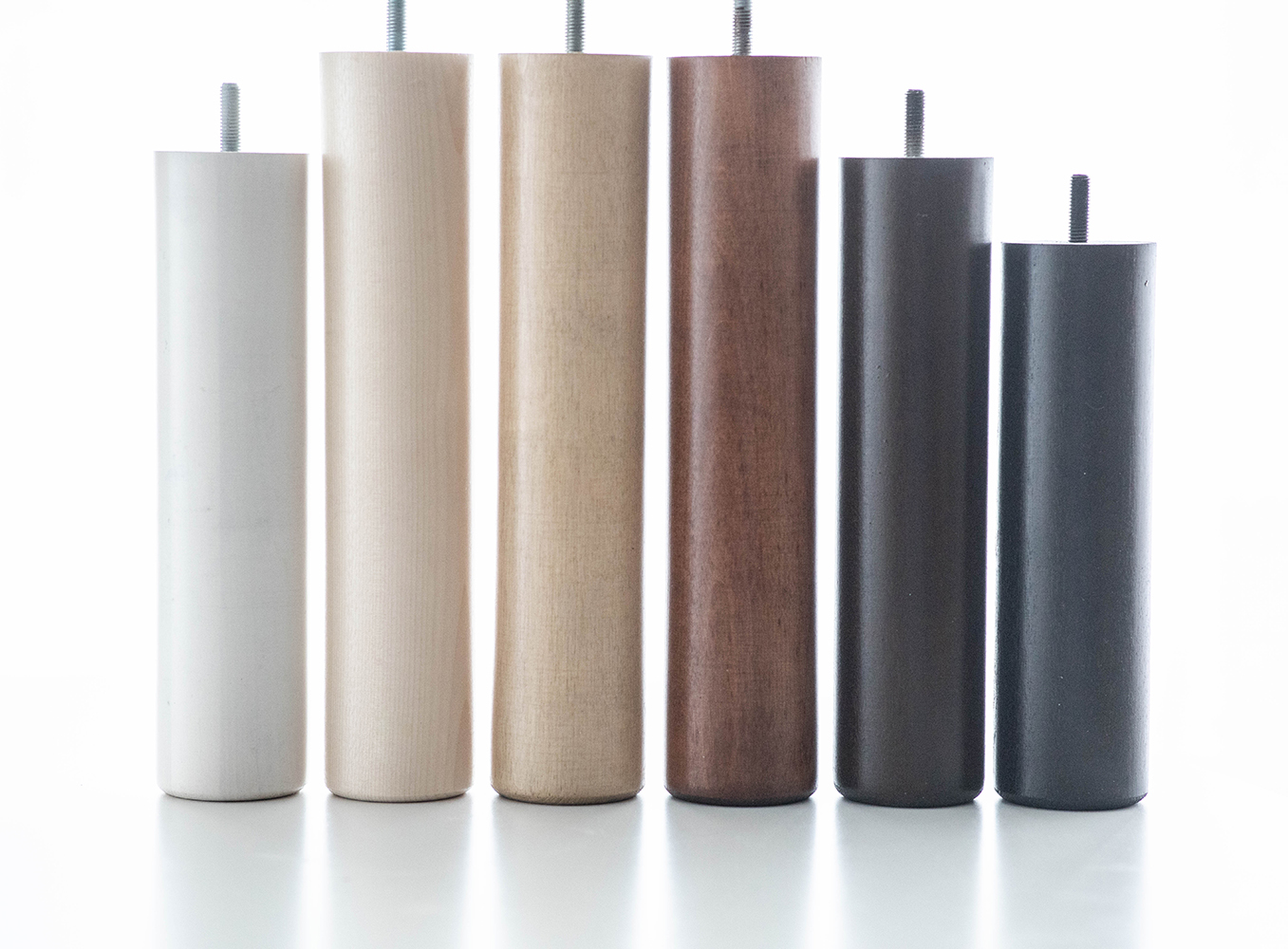
Wooden furniture legs offer many advantages compared to other materials. They bring natural warmth, durability, and timeless elegance to furniture. Wooden legs are an ecological choice, as wood is a renewable natural resource. When properly treated, wooden legs last for decades and age beautifully. They suit different interior design styles and can bear considerable weight thanks to their structure. Additionally, wooden legs can be customized through surface treatment and design to fit your exact needs. Wooden furniture legs are indeed a versatile and functional solution that combines practicality and aesthetics.
Why choose wooden legs for furniture?
Wooden furniture legs are a popular choice for many good reasons. They offer a unique combination of durability, appearance, and versatility, making them an ideal choice for various furniture pieces from beds and sofas to dining tables and cabinets.
Wooden legs bring natural warmth and coziness to furniture that is difficult to achieve with other materials. They often function as an important structural part of the furniture, providing solid support and stability. Wood’s natural beauty adds to the furniture’s visual value, and different wood species’ characteristics enable the creation of various styles and atmospheres.
The adaptability of wooden legs is also a significant advantage. They can be turned, shaped, and surface-treated in countless ways, enabling the implementation of individual solutions. This makes wooden legs a perfect choice for both modern and traditional interior design.
What are the durability benefits of wooden furniture legs?
The durability benefits of wooden furniture legs are based on wood’s natural properties. Wood is structurally flexible yet strong material that withstands weight and wear well. This makes it an excellent choice for durable bed legs and other furniture leg materials.
Especially hardwood species like oak, birch, and ash offer excellent load-bearing capacity. They can carry considerable weights without breaking, which is particularly important for sofa and bed legs. Wood’s natural flexibility also dampens impacts and vibrations, extending the furniture’s lifespan.
Wooden legs are also easily repairable, which increases their longevity. Scratches and dents can be sanded away and the surface can be retreated, making the furniture legs look new again. Unlike many other materials, wood also “ages beautifully” – patina and signs of time can even add to wooden legs’ charm.
When properly maintained, wooden furniture legs can last from generation to generation, making them a sustainable development choice. This longevity also makes wooden legs an economically sensible investment in the long term.
How do wooden furniture legs affect the interior’s appearance?
Wooden furniture legs bring warmth and natural atmosphere to interior design that is difficult to achieve with synthetic materials. They immediately create a cozy and inviting ambiance in the space. Wood as a material evokes positive associations with closeness to nature and traditional craftsmanship.
Different wood species offer a wide range of tones and textures that suit various interior design styles. Light birch brings Scandinavian freshness, darker oak brings classic elegance, and warm-toned pine brings rustic atmosphere. By choosing the wood species, you can significantly influence the furniture’s and entire space’s overall appearance.
The design of wooden legs is also an important aesthetic element. Turned, CNC-machined legs can bring decorative appearance to furniture, while straight-lined modern legs suit minimalist style. The combination of form and wood species can create exactly the desired impression – from classic to modern and everything in between.
Wooden furniture legs also function as a visual bridge between different pieces of furniture. Using similar wooden legs on different furniture creates unity and harmony in interior design. This is particularly beneficial when you want to combine different furniture pieces into a cohesive whole.
Why is wood a more environmentally friendly option for furniture legs?
Wood is significantly more environmentally friendly material for furniture legs compared to plastic or metal for several reasons. Above all, wood is a renewable natural resource – when forests are managed sustainably, new wood grows continuously to replace it. This makes wood a sustainable development choice.
Wood production consumes less energy than plastic or metal manufacturing. Wood processing requires fewer industrial processes and chemicals, reducing the environmental footprint. Additionally, wood material production generates fewer greenhouse gas emissions.
Wood is also a natural carbon sink – trees bind carbon dioxide from the atmosphere as they grow, and this carbon remains in wood products throughout their lifecycle. By using wooden furniture legs, you therefore support climate change mitigation.
Wooden furniture legs are also biodegradable at the end of their lifecycle. Unlike plastic, which remains in landfills for hundreds of years, wood naturally returns to the ecosystem. Additionally, wood products are often recyclable and reusable, reducing waste amounts.
How does Finnish wood differ from other materials in furniture leg manufacturing?
Finnish wood offers unique advantages in furniture leg manufacturing. Thanks to the northern climate, Finnish wood grows slowly, making it particularly dense and durable. This natural characteristic makes furniture legs made from domestic wood more durable than many fast-growing imported wood species.
Compared to metal, Finnish wood is warmer both in physical feel and appearance. Compared to metal, wooden legs also don’t conduct cold or scratch floors as easily. Wood’s natural flexibility makes it a more pleasant material that dampens impacts and sounds.
Compared to plastic, Finnish wood is significantly more durable and ecological. Plastic legs may become brittle over time and change shape, while quality Finnish wood maintains its properties for decades. Wooden legs also age beautifully and can be restored, unlike plastic parts.
Using domestic wood also supports the local economy and reduces environmental impacts from transportation. Finnish forestry is known to be responsible and sustainable, making domestic wood an ethical choice.
What should you know about caring for wooden furniture legs?
Proper care of wooden furniture legs is important for maintaining their beauty and durability. Fortunately, caring for wooden legs is quite simple and requires only minimal regular attention. Regular dust wiping with a soft, slightly damp cloth is usually sufficient for daily care.
The surface treatment of wooden legs significantly affects their care requirements. Lacquered, oiled, and waxed surfaces require slightly different care. Lacquered surfaces are the easiest to maintain, as lacquer protects wood effectively. Oiled and waxed surfaces, on the other hand, require regular treatment with new oil or wax, typically 1-2 times per year.
Moisture is wood’s greatest enemy, so avoid keeping wooden legs in direct contact with wet floors. If legs are used in humid spaces, they should be protected from moisture with appropriate surface treatment. Proper surface treatment also protects wood from stains and wear.
If wooden legs get scratched or dented, damage can often be repaired. Small scratches can be sanded away with fine sandpaper and the surface retreated. Professionally manufactured furniture parts are usually easier to restore than cheaper alternatives.
Summary: Wooden furniture legs – a functional choice for both practicality and style
Wooden furniture legs offer a unique combination of practicality and elegance. Their natural durability, timeless appearance, and environmental friendliness make them an excellent choice for various furniture pieces. Especially Finnish wood as a material offers exceptional quality and durability.
Wooden legs suit many interior design styles and their adaptability gives freedom to create an appearance that fits your home perfectly. When properly maintained, wooden furniture legs can serve for decades, even from generation to generation, making them a sustainable development and economical choice in the long term.
We at Sorvipojat specialize in manufacturing high-quality wooden furniture legs. We use only the finest Finnish wood species and utilize both traditional craftsmanship methods and modern CNC technology. Every sofa leg, bed leg, and other furniture part we manufacture is carefully finished to withstand use and maintain its beauty.
Wooden furniture legs are not just a functional part of furniture – they are also an important part of the furniture’s overall appearance and can even function as the furniture’s eye-catching detail. By choosing wooden legs for your furniture, you choose durability, elegance, and environmental friendliness.
Want to know more or request a quote? Feel free to contact us!