
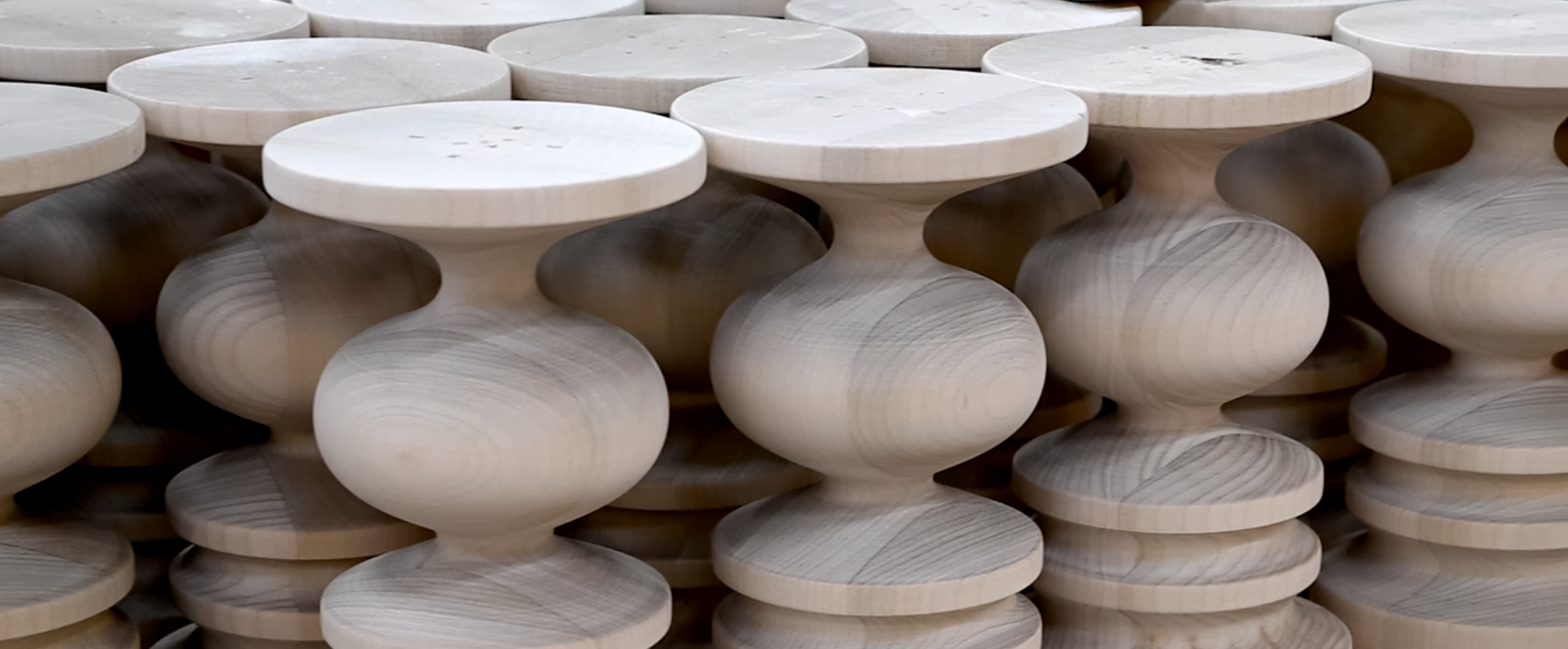
Subcontracting wood turning is an effective way to optimize the production process for many companies manufacturing wood products. By outsourcing wood turning to specialized professionals, companies can focus on their core competencies while gaining access to high-level turning expertise without significant equipment investments. Subcontracting brings flexibility to production, reduces fixed costs, and enables faster response to demand fluctuations. High-quality wood turning through subcontracting streamlines the production process especially when specialized expertise, precision, and consistent quality are required.
What does wood turning subcontracting mean for the production process?
Wood turning subcontracting means purchasing the turning work of wood products or their components from an external, specialized company instead of doing the work in-house. This is an efficient component of the production process that frees up resources and brings specialized expertise.
Companies outsource wood turning for several reasons. When a work phase requiring special expertise is assigned to a professional specialized in it, they can focus on their own strengths and core functions. CNC wood turning requires both special equipment and expertise, the acquisition and maintenance of which would consume significant resources.
Subcontracting also enables flexible scaling of production volumes without additional investments. When demand grows, subcontracting can be increased quickly. Conversely, during quieter periods, fixed costs remain lower when there’s no need to maintain internal turning capacity.
Additionally, using a specialized subcontractor often improves quality and delivery reliability. Turned wood is more consistent when the work is done by an experienced professional who has exactly the right tools and expertise for the specific job.
How does outsourcing wood turning affect production costs?
Outsourcing wood turning significantly affects the production cost structure by converting fixed costs to variable costs and reducing investment needs. This brings financial flexibility and improves cost efficiency.
When wood turning is purchased from a subcontractor, expensive equipment and facility investments are avoided. Turning equipment, especially modern CNC-controlled machines, represents significant investments. The acquisition, maintenance, and upgrade costs of these machines become the subcontractor’s responsibility, freeing up capital for other investments.
Personnel cost optimization is another significant cost benefit. Hiring, training, and retaining specialists is expensive. Subcontracting enables access to skilled labor without these costs. Additionally, labor needs can be sized more accurately according to actual demand.
When production volumes fluctuate, subcontracting brings flexibility to the cost structure:
- During seasonal variations, production can be easily scaled up or down
- During busy periods, capacity can be increased quickly
- When production is renewed, there’s no need to invest in new equipment
- Manufacturing of new products can begin without additional investments
Focusing on core competencies also brings indirect cost benefits. When resources are directed to areas where the company excels, overall efficiency improves and productivity increases.
What quality benefits are achieved with a specialized wood turning subcontractor?
Using a specialized wood turning subcontractor significantly raises product quality, as the subcontractor focuses entirely on mastering and developing their specialty area. This specialization shows in the final product’s quality, consistency, and finish.
A skilled turner knows the characteristics and behavior of different wood species when being machined. Finnish wood requires special expertise to bring out its best properties. Turned wood is at its best when the work is done by a professional who understands the material’s grain, density, and moisture behavior.
Wood turning quality benefits are visible in several ways:
- Dimensional accuracy – turned parts are exactly the right size in every production batch
- Consistency – all production batches match each other
- Finish quality – surface quality and details are professional
- Optimal material use – less waste and better durability
Specialized expertise is particularly emphasized in complex and demanding woodworking. When special shapes, fine details, or traditional turning techniques are needed, industry professionals bring quality to the work that is difficult to achieve without years of experience and specialization.
The subcontractor continuously invests in developing technology, tools, and expertise, which directly benefits client companies. This continuous development reflects in product quality in a way that would be expensive and time-consuming for an individual company to implement themselves.
When is wood turning subcontracting a sensible choice for a company?
Wood turning subcontracting is particularly sensible in situations where a company needs high-quality turned wood parts without significant investments in equipment and expertise. The solution suits many types of business situations and needs.
Seasonal variations are one of the clearest situations where subcontracting makes sense. If your company’s production volumes vary significantly throughout the year, maintaining your own turning resources can lead to either capacity underutilization or inadequacy. Through subcontracting, turning capacity can be adjusted exactly as needed.
The need for specialized components makes subcontracting an attractive option. If products require particularly demanding, precise, or complex turned parts, using a specialized subcontractor is often more cost-effective than developing your own specialized expertise.
Subcontracting is a justified choice also when:
- You want to expand your product range without significant investments
- You need additional capacity quickly
- Your company lacks the necessary specialized expertise for manufacturing certain wood parts
- You want to concentrate resources on core functions like design, marketing, or assembly
- You need flexibility to react quickly to market changes
Wood turning subcontracting is a strategic choice especially when it supports the company’s core business and frees up resources for areas where your company is strongest. It also reduces business risk, as investments remain the subcontractor’s responsibility.
How does collaboration with a wood turning subcontractor work in practice?
Collaboration with a wood turning subcontractor starts with clear needs definition and continues as a seamless process from design to finished products. Functional collaboration is based on open communication and clear processes.
At the beginning of collaboration, the required products and components are precisely defined. This includes technical drawings, material selections, and quality requirements. The more precisely you can define your needs, the better the subcontractor can meet them. A good subcontractor also helps with technical solution design and material selections.
The prototype phase is often an important part of the process. At this stage, the subcontractor manufactures sample pieces that can be examined and modified if necessary before starting actual production. This phase ensures that the final result meets expectations.
The production process typically proceeds as follows:
- Request for quotation and submission of technical information
- Subcontractor’s offer and agreement on delivery schedule
- Possible prototype manufacturing and approval
- Actual production according to agreed schedule
- Quality assurance and delivery
- Feedback discussion and possible development measures
Quality assurance is an essential part of collaboration. Ensure that the subcontractor has clear quality criteria and processes. In good collaboration, both parties are committed to continuous development and quality improvement.
Long-term collaboration creates a foundation for streamlining processes. When the subcontractor learns to know your needs and operating methods, collaboration becomes more efficient and flexible. Regular communication and feedback are key to a successful subcontracting relationship.
What production process efficiency benefits should be pursued through subcontracting?
Through wood turning subcontracting, you can achieve significant efficiency benefits for the production process. The key benefits relate to flexibility, specialization, and efficient resource allocation.
Production flexibility is one of the most important advantages of subcontracting. When turning work is outsourced, you can react quickly to demand changes. Production volumes can be easily scaled up or down without your own resources or capacity forming a bottleneck.
Speed is a competitive advantage that subcontracting can significantly improve. A specialized subcontractor can often deliver turned parts faster than they could be manufactured internally. This enables shorter delivery times to customers and smaller inventories.
Through subcontracting, resource efficiency should also be pursued:
- Space utilization optimization – no need for production space required by turning machines
- Directing personnel resources to core functions
- Concentrating investments on strategically important targets
- More efficient use of energy and materials
The benefits of specialization are significant. When each operator focuses on their core competency, overall efficiency improves. The subcontractor continuously develops their turning expertise, and you can focus on developing your own business.
We at Sorvipojat offer reliable and high-quality wood turning subcontracting with Finnish craftsmanship and top-class equipment. We use domestic wood and combine traditional handicraft skills with modern manufacturing methods. Collaboration with us brings to your production process exactly those efficiency benefits you need to improve competitiveness.
Want to know more or request a quote? Feel free to contact us!