
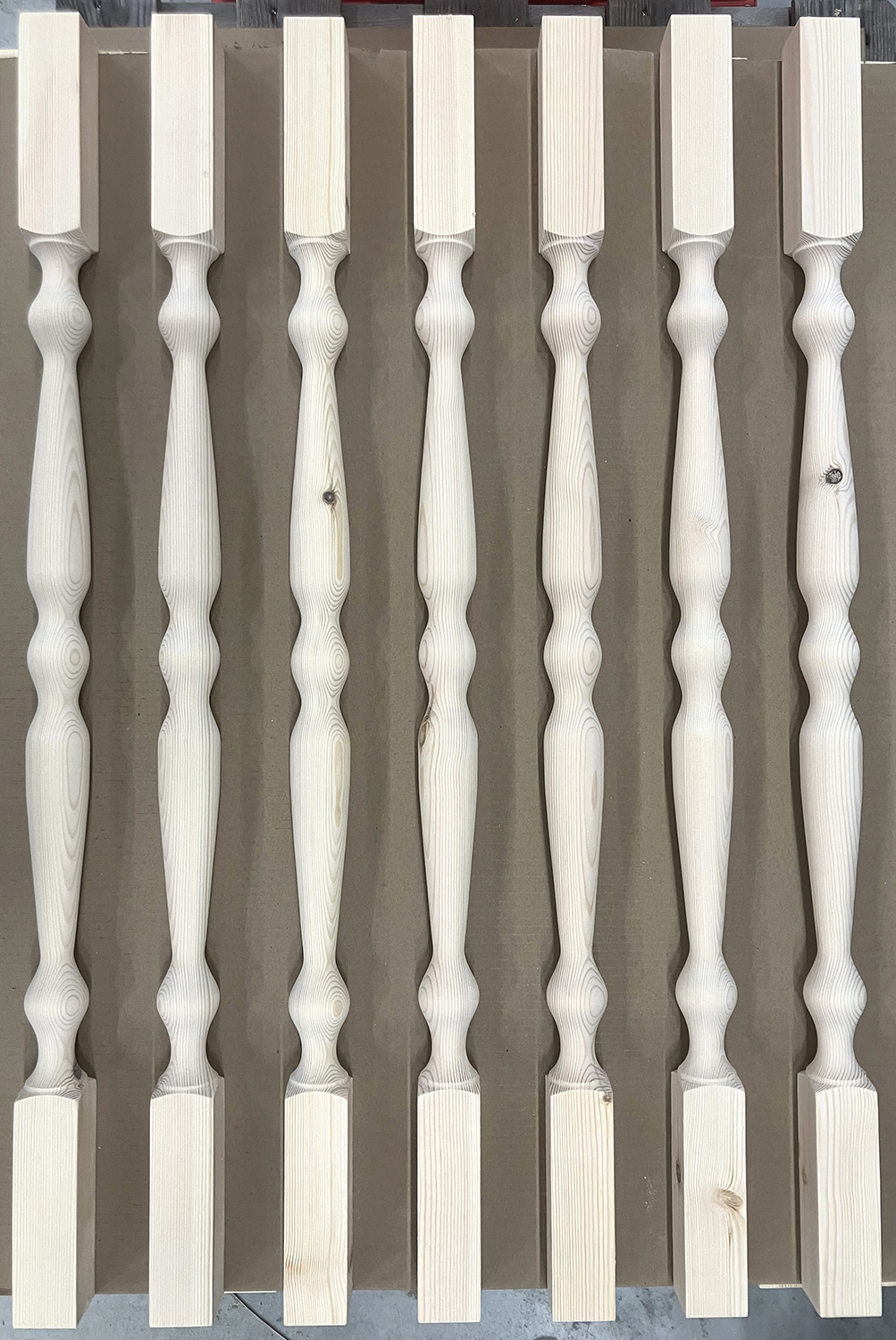
A turned baluster is generally more durable than a standard, rectangular model. This is due to the fundamental characteristics of wood turning: turning follows the wood’s natural grain, better preserving the material’s structural integrity. In ordinary, sawn balusters, the wood grain may break, which weakens their durability. The round shape of turned balusters also distributes weight and stress more evenly throughout the entire structure, which significantly extends their lifespan, especially in staircases and terraces. Additionally, turned models offer aesthetic advantages and are particularly well-suited for projects where balusters are a visible part of the interior design.
What is the difference between a turned and regular baluster?
The key difference between a turned and regular baluster is in their manufacturing technique and shape. A turned baluster is made by rotating a wood blank around its axis while working it with various turning tools. This enables round shapes and decorative details that are not possible with conventional sawing and milling methods.
A regular baluster is typically rectangular and manufactured using traditional woodworking methods such as sawing and planing. These methods easily leave straight angles and surfaces where moisture can penetrate over time.
The turning method respects the wood’s natural structure. During wood turning:
- The wood grain remains more continuous and intact
- The material’s internal tension is distributed more evenly
- Surface treatments adhere better to round surfaces
In terms of applications, turned balusters are particularly suitable for impressive staircases, terrace railings, and traditional construction where aesthetics are important. Regular balusters are often used in projects where cost-effectiveness and simple appearance are priorities.
Why might a turned baluster’s durability be better?
The improved durability of a turned baluster is based on several technical factors. When turned, wood retains its natural grain structure more intact, which increases its structural strength. When a wood blank is turned, the work occurs primarily following the wood grain, so they are not cut as radically as with straight cuts.
A round shape is structurally stronger than an angular one. This is because:
- Stress is distributed more evenly throughout the structure without weak corners
- The risk of moisture damage decreases as water runs off round surfaces more efficiently
- The wood’s natural movement causes less tension in a round structure
Additionally, professionally turned balusters are usually manufactured more carefully from selected wood materials. We manufacture our products from carefully selected Finnish wood species whose properties are particularly well-suited for balusters and other load-bearing wooden elements.
Turning also enables more precise surface treatment, which improves the wood’s ability to resist moisture, UV radiation, and other external stress factors. This significantly extends the baluster’s lifespan.
In what types of projects is a turned baluster particularly beneficial?
Turned balusters bring special added value to projects where aesthetics and durability requirements combine. Impressive staircases benefit from turned balusters, as stairs are often a home’s central eye-catcher. The skillful details of turned balusters, such as knobs, tapers, and decorative grooves, make the staircase an impressive element.
Historical sites and heritage construction are a natural environment for turned balusters. Traditional wood turning techniques enable the reproduction of period-typical details, which is important when renovating old sites while respecting their original appearance.
Sites where railings are exposed to heavy stress benefit from the improved durability of turned models:
- Public spaces where railings are in continuous use
- Terraces and balconies exposed to weather variations
- Families with children where railings face exceptionally heavy stress
- Boats and docks where excellent moisture resistance is required
Individual design projects are also ideal for turned balusters. Turning technique enables the manufacture of completely unique models according to customer wishes, which is more difficult to achieve with traditional woodworking methods.
How does wood species affect baluster durability?
Wood species is a key factor in baluster durability. Different wood species naturally have different properties that affect their suitability for this purpose. Finnish wood species offer an excellent combination of durability and workability.
Oak is an extremely durable and long-lasting choice for balusters. Its dense grain structure and natural oil content make it an excellent option for projects requiring special strength. Oak also withstands moisture variations well, which is an advantage in both indoor and outdoor spaces.
Pine and spruce are traditional Finnish options that work well as baluster material when properly treated. Pine heartwood is naturally more durable than sapwood, and a baluster made from properly selected, dense-grained pine can be very long-lasting.
Birch offers an excellent balance between workability and durability. It is particularly suitable for indoor balusters, where its light color and clean appearance shine. Birch accepts various surface treatments well, enabling versatile finishing possibilities.
Ash is a flexible yet durable wood species that works excellently for balusters. Its strong and tough structure makes it a good choice for projects where the railing must withstand bending.
How should a turned baluster be properly maintained?
Proper care significantly extends a turned baluster’s lifespan. Regular maintenance is key to ensuring wood material durability. Renewing surface treatment is among the most important actions that should be performed every few years or when the surface begins to look worn.
Indoors, caring for turned balusters is fairly effortless:
- Regular dust removal with a soft, lightly moistened cloth
- Avoid abrasive cleaning agents that can damage the surface treatment
- Check fastenings regularly and tighten as needed
- Renew waxed or oiled surfaces as needed, usually every 1-3 years
Outdoors, such as in terrace railings, wood material maintenance needs are greater:
- Clean surfaces thoroughly in spring and fall
- Check surface treatment condition annually
- Renew surface treatment every 2-5 years depending on weather conditions and the surface treatment method used
- Repair even small damages immediately upon their appearance
We favor natural surface treatment options, such as linseed oil, beeswax, and natural resin-based products. These treatments protect wood effectively while preserving its natural beauty and breathability. Natural treatments are also easier to renew, as they don’t flake like many synthetic lacquers.
Summary: Which baluster suits your specific needs?
Baluster selection depends on several factors: application, aesthetic preferences, and durability requirements. A turned baluster is an excellent choice when seeking both longevity and visual impressiveness. It is particularly suitable for projects where the railing is a visible part of the interior or architecture.
A regular, rectangular baluster can be a functional solution in simple projects where appearance is not the primary criterion. It is often also a more cost-effective option in larger projects.
We at Sorvipojat believe in wood quality and the importance of craftsmanship. We manufacture high-quality, turned balusters from Finnish wood. Each baluster we manufacture is a carefully considered whole that combines:
- First-class Finnish wood material
- Traditional craftsmanship combined with modern technology
- Environmentally friendly and sustainable surface treatments
- Consideration of customer’s individual wishes
Want to know more or request a quote? Feel free to contact us!